
We are pleased to announce two important updates to the BCCOHP standards framework:
- BCCOHP’s Standards for the Oral Health Team (PDF) has been revised and retitled
- A unified Recordkeeping Practice Resource (PDF) has been created
We are publishing and sharing these now to provide time for oral health professionals to review the documents before they come into force on April 1, 2026.
All oral health professionals are responsible for reviewing these documents in preparation for the upcoming transition.
Details related to each of these key documents are below:
Standards for the Oral Health Team

Following the initial rollout of the unified Professional Standards for the Oral Health Team last June, BCCOHP has been working to build out and modernize the remaining elements of our standards framework.
It was determined that all unified standards (including practice standards) should exist in the overarching Standards for the Oral Health Team document rather than being drawn out into standalone documents. The standards will then be supported by practice resources documents as necessary.
The revisions outlined below are a result of the ongoing work to modernize our standards framework, as well as preparations for compliance with the incoming Health Professions and Occupations Act.
Summary of updates
The unified practice standards will exist inside the overarching standards document, which is being retitled as Standards for the Oral Health Team. The standards include the minimum professional, ethical and practice requirements for oral health professionals.
| Title change | Document title simplified to “Standards for the Oral Health Team” from “Professional Standards for the Oral Health Team” |
| Revised standards framework | Shifting from a framework of separate professional and practice standards documents to one where all unified standards exist in the single, overarching Standards for the Oral Health Team and are supported by various practice resources. Recordkeeping standards now live inside the Standards for the Oral Health Team, with the addition of Standard 1.9., and amendments to Standards 1.6 and 2.4, including additional performance indicators. |
| Terminology changes | The term “performance indicators” is replacing the previous wording of “how to meet the standards” and is defined in the Compliance section. Terminology update to reflect incoming Health Professions and Occupations Act (and remove references to outgoing Health Professions Act). |
| Bylaws | Advertising and Marketing: The incoming bylaws to align with the HPOA do not include specific marketing and advertising requirements. Oral health professionals are expected to comply with existing and applicable legislation. Section 6.2.1 has been amended accordingly. Authorization and Delegation: The new bylaws do not include authorization of aspects of practice. Instead, delegation has been redefined to include ‘with or without supervision’. The glossary, Standard 5.3 and section 5.3.3 have been amended accordingly. |
| Critical Incident Report | This has been removed (6.6.6) as it only applies in the existing Sedation and General Anesthesia Practice Standards. Duty to Report covers the requirement to report any incident which relates to misconduct. |
New: Recordkeeping Practice Resource
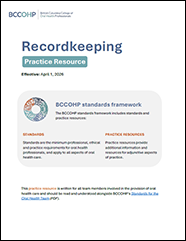
To support the revised standards described above, the first practice resource to roll out in this framework is the Recordkeeping Practice Resource.
With the recent revisions, the Standards for the Oral Health Team document now includes all practice standards for recordkeeping (as noted above). This new Recordkeeping Practice Resource provides additional information and resources to facilitate understanding of (and compliance with) the Standards for the Oral Health Team.
Transitioning from the legacy practice resources
On April 1, the Recordkeeping Practice Resource will replace a number of legacy college recordkeeping resources that are currently in place.
- Dentists, certified dental assistants and dental therapists: Dental Recordkeeping Guidelines >>
- Denturist Recordkeeping >>
- Dental technicians: prescriptions and business records >>
- Dental hygienists: Practice Standards for Recordkeeping >>
The new unified standards were simplified from existing standards, and no material changes were made. An inventory of legacy documents is maintained here and has been updated to reflect the documents being removed on April 1 (and the rationale for removal).